Fire Marshal / Warden Course at Your Workplace
Practical half-day training for your nominated fire marshals and wardens — delivered by an experienced instructor on site at your premises, anywhere in the UK. One fixed price for up to 12 people. Your team leaves with the knowledge, confidence, and certificate they need to keep your workplace compliant and your people safe.
Why every workplace needs trained fire marshals
Under the Regulatory Reform (Fire Safety) Order 2005 — the principal fire safety law for non-domestic premises in England and Wales — the Responsible Person (usually the employer or person in control of the building) must appoint one or more competent persons to help put fire safety measures into practice. That includes raising alarms, sweeping evacuation zones, managing the assembly point, and supporting the fire and rescue service on arrival.
Naming someone as a fire marshal without giving them proper training does not meet that duty. A fire marshal or warden needs to know the law, recognise hazards before they become fires, and lead a calm, accountable evacuation — even under pressure. This course covers all of that, at your workplace, in half a day.
Who is this course for?
The Fire Marshal / Warden Course is for any member of staff who has been nominated to carry out fire safety responsibilities in your organisation. Common attendees include:
- Employees formally named as fire marshals or fire wardens on your fire risk assessment
- Floor wardens and zone sweepers in offices, warehouses, schools, and care homes
- Supervisors and team leaders who hold responsibility for safe evacuation
- Health and safety officers and facilities managers
- Anyone stepping into a fire warden role for the first time, or refreshing an older certificate
No prior fire safety training or qualifications are needed to attend. The course starts from the ground up.
What your team will learn
The course follows a structured syllabus built around the requirements of the Regulatory Reform (Fire Safety) Order 2005 and sound fire safety practice. By the end of the session, every delegate will understand:
Fire safety law and the warden's role
- The Regulatory Reform (Fire Safety) Order 2005 — what it requires, who it applies to, and what the Responsible Person must have in place
- Article 18 of the RRO: the duty to appoint competent persons and what "competent" actually means
- The specific duties of a fire marshal and fire warden within your organisation's fire safety structure
- How the warden role connects to the wider fire risk assessment and emergency procedures
Fire causes, hazards, and the fire triangle
- How fire starts and spreads — the fire triangle (heat, fuel, oxygen) and why removing any one element extinguishes a fire
- The most common causes of workplace fires: electrical faults, ignition sources near combustibles, poor housekeeping, and arson
- How to spot hazards during a routine check and what to do — report, remove, escalate
- Good housekeeping practices: keeping escape routes clear, managing waste storage, controlling ignition risks, and maintaining fire doors
Fire risk assessments and prevention
- The five steps of a fire risk assessment and how marshals contribute to them
- Understanding your workplace's emergency plan, action cards, and site-specific procedures
- The importance of fire door integrity, self-closers, and not propping doors open
- Electrical safety awareness — overloaded sockets, damaged cables, and equipment left on overnight
Detection, alarms, and safety equipment
- How fire detection and alarm systems work — manual call points, automatic detectors, alarm panels
- Emergency lighting, fire exit signage, and what to check during regular inspections
- Classes of fire under BS EN 2: Class A (solids), B (flammable liquids), C (gases), D (metals), and F (cooking oils/fats), plus electrical fires
- UK extinguisher types — water (red), foam (cream), dry powder (blue), CO₂ (black), wet chemical (yellow), and water mist — and which class of fire each is suited to
- The PASS technique for using a fire extinguisher: Pull the pin · Aim at the base · Squeeze the handle · Sweep side to side
- When to fight a small fire and — critically — when to leave it alone and evacuate
Emergency evacuation procedures
- The marshal's role on hearing the alarm: when to raise it, how to sweep and clear your zone, and the sequence of actions to take
- Directing people to assembly points calmly and efficiently — including managing panic
- Searching rooms, checking toilets and store cupboards, and confirming evacuation is complete
- Personal Emergency Evacuation Plans (PEEPs) — identifying staff or visitors with mobility, sensory, or cognitive needs and planning to support them during an evacuation
- Roll-call and accounting for everyone at the assembly point
- Liaising with the fire and rescue service on arrival: who speaks to them, what information to give, and when it is safe to return
- What a fire drill tests and how to contribute to a debrief that actually improves procedures
How the day runs
Your trainer arrives at your premises and sets up in whatever room you have available — a meeting room, a canteen, a break-out space. No specialist equipment is needed and nothing needs to be moved other than chairs.
The session opens with the legal framework so every delegate understands why the role matters and what happens if fire safety duties are not met. From there, the focus becomes practical: your trainer works through hazard recognition, equipment identification, and evacuation procedures in a way that relates directly to your building. There is discussion, worked examples, and time for questions at every stage.
The session is interactive rather than lecture-based — delegates leave genuinely better prepared, not just having sat through slides. The whole programme fits comfortably within a half day, making it easy to schedule around your team's workload.
Assessment and certificate
There is no written examination. Assessment is continuous — your trainer observes participation and understanding throughout the session and uses group discussion to confirm that key points have landed. This low-pressure format means delegates focus on learning rather than test anxiety.
Every delegate who completes the course receives a Fire Marshal / Fire Warden certificate of attendance issued by First Aid Training On Site. Good practice — and a sensible insurance and compliance position — is to refresh this training every three years, supported by regular fire drills in between.
Why deliver the Fire Marshal / Warden Course on site at your workplace?
Sending staff on an open course means travel time, mileage, half a day away from the workplace, and generic training that has nothing to do with your building. The on-site alternative is better in almost every respect:
Fixed price for up to 12 people
from £495 + VAT covers the whole group. With 12 delegates that works out at under £42 per person — a fraction of public course per-head rates once you add travel costs and lost working time.
No travel, no disruption
Your team trains in your own building. No one needs to drive, park, or spend the morning commuting. Staff are back at their desks the moment the session ends.
Tailored to your premises
Your trainer references your actual evacuation routes, your specific extinguisher locations, your assembly points, and any site-specific hazards. That relevance makes the training stick.
Dates that suit you
We work around your shift patterns, busy periods, and operational needs. You pick the day; we come to you.
Pair it with other training
Because the Fire Marshal / Warden Course is a half-day programme, many organisations add our Fire Safety Awareness or Manual Handling session in the same visit — doubling the compliance value for one trainer visit.
Fast turnaround
Certificates lapsed or an inspection deadline approaching? We aim to confirm a date within days. Let us know your situation when you enquire and we will move quickly.
Fire safety law — what you need to know
The Regulatory Reform (Fire Safety) Order 2005 (RRO) is the primary fire safety legislation for non-domestic premises in England and Wales. It places a duty on the Responsible Person — typically the employer, building owner, or person in control of premises — to:
- Carry out and keep under review a fire risk assessment
- Put in place appropriate fire safety measures based on that assessment
- Under Article 18, appoint one or more competent persons to help implement those measures — this is the legal basis for the fire marshal / warden role
- Provide adequate fire safety training to all employees, at induction and repeated periodically
- Ensure fire safety measures are maintained and effective
Scotland and Northern Ireland have equivalent legislation (Fire (Scotland) Act 2005 and Fire and Rescue Services (NI) Order 2006 respectively) with the same underlying principle: trained, nominated fire marshals are a fundamental part of workplace compliance.
A fire inspection that finds nominated marshals have received no formal training is a straightforward route to an enforcement notice. Getting your team trained is one of the simplest compliance steps an employer can take — and one of the most cost-effective.
Course summary
- Price
- from £495 + VAT (up to 12 people)
- Duration
- Half day
- Where
- At your premises, UK-wide
- Accreditation
- In-house certificated
- Certificate
- Fire Marshal / Fire Warden certificate of attendance
Or call 0800 852 7739
What's included
- Experienced instructor at your site
- All course materials supplied
- Certificate of attendance for every delegate
- Training shaped around your premises
- No travel or hidden extras
What you need to provide
- A room large enough for the group
- Chairs and a writing surface
- Toilets and adequate ventilation
- Parking or unloading access for your trainer
Your questions about the Fire Marshal / Warden Course answered
Is fire marshal training a legal requirement?
Yes, in practice. The Regulatory Reform (Fire Safety) Order 2005, Article 18, requires the Responsible Person to appoint one or more competent persons to assist with fire preventive and protective measures, including evacuation. Simply naming someone as a fire marshal is not enough — they must receive adequate training to carry out that role competently. A fire inspection that finds nominated marshals have had no formal training is a clear route to an enforcement notice.
How many fire marshals does my workplace need?
There is no fixed statutory number. The right figure for your premises comes from your fire risk assessment and takes into account floor layout, shift patterns, the number of people on site, and whether any staff or visitors need assistance evacuating. As a working guide, many premises aim for one marshal per floor or zone — enough to sweep the area and account for everyone without delaying the evacuation. Your trainer can discuss your specific layout during the session and help you think through coverage.
Who should attend the Fire Marshal / Warden Course?
Anyone you have nominated — or plan to nominate — as a fire marshal or warden. That typically includes supervisors, team leaders, floor wardens, health and safety officers, facilities managers, and any other member of staff named on your fire risk assessment as a competent person for fire procedures. No prior fire safety training or qualifications are needed. The course is equally suitable for first-timers and for those refreshing a certificate that has lapsed.
What certificate does each delegate receive?
Every delegate who completes the course receives a Fire Marshal / Fire Warden certificate of attendance, issued by First Aid Training On Site. The certificate confirms that the individual has completed the programme and should be held on file as evidence of compliance. Good practice is to refresh this training every three years, with fire drills held regularly in between to keep skills current.
How many people can train in one session?
Up to 12 people per session, all included in the one fixed price of from £495 + VAT. If you have more than 12 marshals to train — for example across a large site or multiple departments — we simply arrange additional sessions. Let us know your total headcount when you enquire and we will put together the most efficient plan.
How long does the Fire Marshal / Warden Course take?
The course is a half-day programme — typically around four hours including discussion and questions. Most organisations run it in the morning so their marshals are back at their desks by early afternoon. Alternatively, many pair it with our Fire Safety Awareness or Manual Handling training in the same visit to maximise the value of one trainer visit.
What do we need to provide on the day?
Just a suitable room — a meeting room, canteen, or break-out space — large enough to seat your group comfortably, with chairs and a writing surface. Toilets, adequate ventilation, and parking or unloading access for your trainer are the other essentials. Your trainer brings all course materials, handouts, and visual aids. There is no equipment to prepare in advance.
Can the training be tailored to our workplace?
Yes — and this is one of the key advantages of on-site delivery. Your trainer can reference your actual building layout, your evacuation routes, your specific extinguisher locations, and any hazards particular to your premises. Examples and scenarios can be drawn directly from your working environment, making the training far more relevant and memorable than a generic open course.
Does the course cover Personal Emergency Evacuation Plans (PEEPs)?
Yes. The session covers how fire marshals should identify staff or visitors who may need assistance evacuating — including people with mobility, visual, hearing, or cognitive impairments — and how to support them safely during an evacuation. Understanding PEEPs is a key part of the competent-person role under the fire risk assessment duty, and your trainer will address how to put a practical plan in place for your specific team.
Is there a written exam at the end?
No. Assessment is continuous — your trainer observes participation and checks understanding through discussion throughout the session. There is no formal written test. The aim is genuine practical readiness, not a pass mark on paper, so the format keeps the atmosphere calm and focused on learning.
Can we combine fire marshal training with other safety courses on the same day?
Absolutely. Because the Fire Marshal / Warden Course runs for a half day, many organisations pair it with our Fire Safety Awareness course (the foundation-level programme for all staff) or a Manual Handling session to complete two compliance requirements in a single trainer visit. Just mention what you need when you get in touch and we will put a combined quote together.
Complete your workplace safety training
All delivered on site at your premises — choose from these complementary courses to tick more compliance boxes in a single visit.
Fire Safety Awareness
Foundation-level fire safety for every member of your team — what to do if they discover a fire or hear the alarm. Pair it with this course on the same day.
Manual Handling Training
Half-day training on safe lifting, carrying, and moving loads — required wherever manual handling risks cannot be avoided.
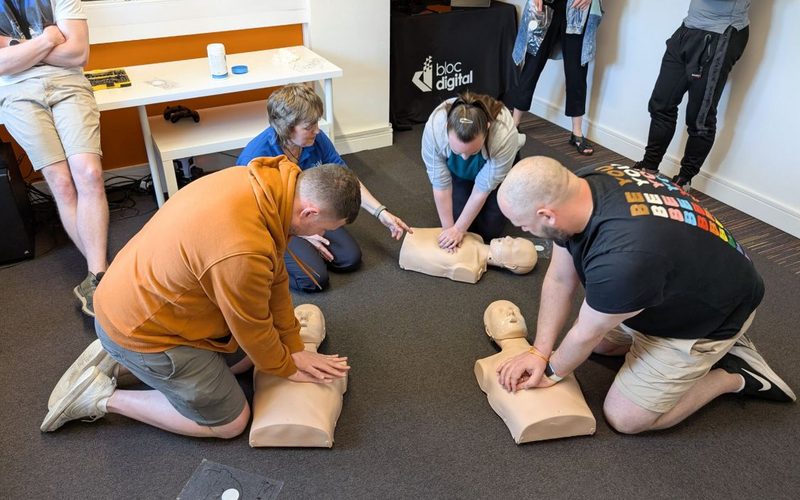
Emergency First Aid at Work
One-day HSE-compliant workplace first aid — FAIB accredited, certificates valid three years. The standard qualification for lower-risk offices and workplaces.
Ready to book your Fire Marshal / Warden Course?
One fixed price of from £495 + VAT for up to 12 people, at your premises, on a date that suits your team. Send us an enquiry and we will confirm availability fast — or call us now if you have an urgent deadline.