First Aid Training for Schools
FAIB-accredited first aid training for school staff — covering adult and child emergencies, delivered at your school on a date that suits you. One fixed price for up to 12 people. We come to you.
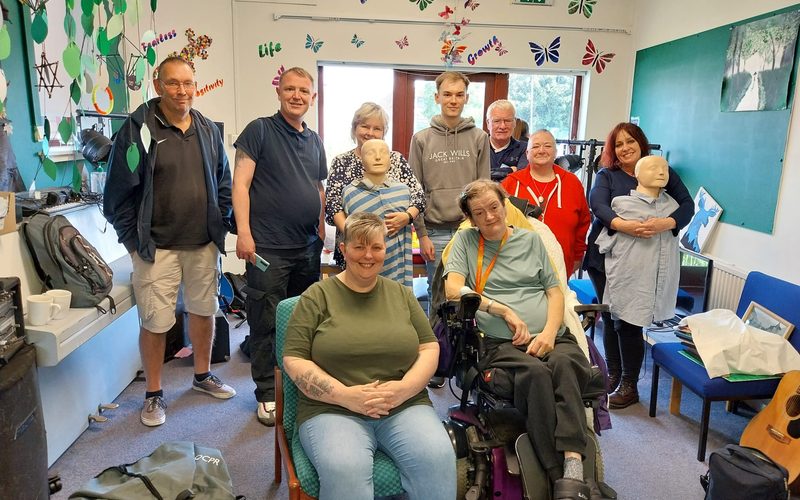
Why schools need first aid training on site at your workplace
A school environment is unlike any other workplace. In the space of a single afternoon your staff might deal with a child who has a severe allergic reaction in the dining hall, a colleague who collapses during a fire drill, and a pupil who sustains a head injury on the sports field. Standard workplace first aid courses cover adult casualties only — and that is not sufficient for the realities of a school day.
This course is purpose-built for education settings. It gives your team a confident, practical grounding in first aid for both adults and children, covering the core Emergency First Aid at Work syllabus as well as the paediatric and education-specific topics — anaphylaxis, asthma attacks, seizures, diabetic emergencies and head injuries — that are most likely to occur on your premises. Every delegate is trained together at your school, on a date you choose, for a single fixed price.
Training is delivered on site at your school anywhere in the UK, so there is no travel cost, no supply cover wasted on journeys, and no staff away from their responsibilities during the working week.
Who is this course for?
First aid training for schools is the right choice for anyone employed in a primary school, secondary school, sixth-form college or similar educational setting, including:
- Class teachers and form tutors — the first adult on the scene in a classroom or corridor incident
- Teaching assistants and learning support staff — often working directly with pupils who have complex medical needs
- Lunchtime supervisors and midday assistants — responsible for large numbers of children in less-supervised settings
- Administrative and reception staff — typically the first port of call when a pupil or visitor falls ill
- Site teams and premises managers — responsible for the physical environment and often first to respond outdoors
- Sixth-form and FE college support staff — managing a mixed adult and near-adult population
If you manage an early years setting — a nursery, pre-school or childminder provision — and need to meet EYFS staffing ratio requirements, our Paediatric First Aid (Level 3) qualification (Qualsafe Awards, Ofqual-regulated) is the appropriate course. This schools first aid course is not a substitute for that mandatory EYFS qualification.
What your team will learn — full syllabus
The course covers both adult and child first aid, giving your staff the skills and confidence to respond to the most common emergencies in a school environment. Topics covered include:
Immediate response skills
- The role and responsibilities of the first aider in a school; preventing cross-infection; accessing the emergency services
- Scene safety and the primary survey — DRSABC (Danger, Response, Shout, Airway, Breathing, Circulation)
- Managing an unresponsive adult or child casualty — maintaining the airway and placing in the recovery position
- CPR for adults — correct hand position, compression depth and rate (100–120 per minute), rescue breaths and the 30:2 ratio
- CPR for children — initial 5 rescue breaths, 15:2 ratio, appropriate compression depth and one-hand technique
- Safe use of an Automated External Defibrillator (AED) with both adult and paediatric pads
Choking and breathing emergencies
- Recognising and responding to choking in adults and children — back blows, abdominal thrusts, and when to call 999
- Asthma attacks — recognising the signs, supporting correct inhaler use, and knowing when symptoms become life-threatening
- Anaphylaxis and severe allergic reactions — recognition, when to use an adrenaline auto-injector (EpiPen), calling 999, and position of care; relevant for schools with pupils who carry prescribed emergency medication
Injuries, bleeding and shock
- Controlling severe external bleeding — direct pressure, improvised dressings, monitoring for shock
- Managing shock — recognising the signs, positioning and keeping the casualty calm while waiting for the emergency services
- Minor wound care — cuts, grazes, splinters, blisters and small burns
- Head injuries and suspected concussion — signs to look for, when to call an ambulance, and when to contact parents
- Fractures, sprains and falls — immobilisation, managing pain and when to summon help
Medical emergencies
- Seizures and epilepsy — safe management during and after an episode, timing, recovery position and when to call 999
- Diabetic emergencies — recognising hypoglycaemia and hyperglycaemia and the appropriate response for each
- Febrile convulsions — common in younger pupils; safe management and when to call an ambulance
Record-keeping and school-specific considerations
- Documenting first aid incidents — what to record and why it matters for RIDDOR and safeguarding purposes
- Pupils with individual healthcare plans — understanding how first aid duties connect to the school's medical conditions policy
- When to involve parents, the emergency services, and other members of staff
How the day runs
Your trainer arrives at your school before the session begins, sets up the training room and checks the space is ready for practical work. From the outset, teaching is hands-on: short taught sections lead directly into practice, so staff spend most of the day on their feet, actively applying skills rather than taking notes.
Scenarios are drawn from real school situations — a child who has collapsed in the playground, a colleague showing signs of a heart attack, a pupil in anaphylactic shock. Practising in your own building means the training feels immediately relevant and is easier to recall under pressure when it actually matters.
The format is flexible. Most schools use an inset day, but we can adapt to a long afternoon, a twilight session, or any other window your timetable allows. Tell us your constraints when you enquire and we will find a shape that works for you.
Assessment and certificate
There is no written exam. Competence is assessed continuously throughout the day through observation of practical skills — your trainer watches each delegate perform the key techniques and confirms they have met the required standard.
Everyone who meets the standard receives a First aid for education staff certificate. The certificate is FAIB-accredited and valid for three years from the date of issue. FAIB accreditation is recognised by HSE and Ofsted and confirms that training has been delivered by a competent provider to a recognised standard — the same legal standing as any major national provider.
HSE strongly recommends a short annual refresher during the three-year certificate life to keep practical skills current. Our Annual First Aid Refresher (from £495 + VAT for up to 12 people) is designed exactly for this purpose and can be booked well in advance so compliance never lapses.
Why train on site at your school?
The cost comparison
- On-site training (this course)
- from £495 + VAT for up to 12 people — that is under £42 per head for a full group
- Public/open course (typical)
- £80–£120 per head, plus travel time and cost for every delegate
- Lost teaching time
- Zero — training takes place in your own building, on your schedule

The fixed price covers the entire group, so the economics improve the more staff you train together. With 12 delegates, the per-head cost is well under £42. Compare that to the typical per-head price of an open course — usually £80 or more, before travel time and fares — and on-site training pays for itself from around seven people upwards.
Beyond the cost, there are practical advantages that an open course simply cannot match:
- No disruption to the school day — staff train in their own building, on a date you choose, without any commuting or supply cover costs
- Scenarios set in your environment — your trainer can reference your actual layout, your first aid cabinet, and the specific conditions of your site
- Whole team certified together — everyone gets the same information on the same day, making cover and handover straightforward
- Dates to suit your timetable — inset days, staff training days, extended afternoons — we fit around your calendar
- We bring everything — manikins, AED training units, dressings, scenario props and course materials; you just provide the room
Your legal and regulatory duty as a school
Schools are employers and are subject to the Health and Safety (First-Aid) Regulations 1981, which require every employer to make adequate and appropriate first aid provision based on a first aid needs assessment. The assessment considers the number of staff, the nature of the risks on site, working patterns, and the presence of vulnerable individuals.
DfE statutory guidance ("First aid in schools, early years and further education") extends this best practice to pupils and visitors and states that the vast majority of schools will need at least one trained first aider available at all times. While there is no fixed legal ratio of first aiders to pupils in mainstream school law, any school that cannot demonstrate adequate provision is exposed to enforcement action from the HSE.
Section 100 of the Children and Families Act 2014 places a separate duty on governing bodies to support pupils with medical conditions — including ensuring staff are trained to administer emergency medication where a pupil's individual healthcare plan requires it.
Certificates are valid for three years. Retraining before expiry maintains unbroken cover and ensures your school's needs assessment remains satisfied.
Course summary
- Price
- from £495 + VAT (up to 12 people)
- Duration
- 1 day (flexible)
- Where
- At your premises, UK-wide
- Accreditation
- FAIB-accredited
- Certificate
- First aid for education staff certificate (valid 3 years)
Questions about first aid training for schools
Who is this course designed for?
This course is designed for teaching and non-teaching staff in primary schools, secondary schools, sixth-form colleges and similar educational settings — including teachers, teaching assistants, lunchtime supervisors, administrative staff and site teams. For childminders, nurseries and pre-schools that need to meet EYFS staffing ratio requirements, our Paediatric First Aid (Level 3) qualification (Qualsafe Awards, Ofqual-regulated) is the appropriate route.
What legal duty covers first aid provision in schools?
Schools are employers and must comply with the Health and Safety (First-Aid) Regulations 1981, which requires every employer to make adequate and appropriate first aid provision, decided by a first aid needs assessment. DfE statutory guidance extends best practice to pupils and visitors, and section 100 of the Children and Families Act 2014 requires governing bodies to support pupils with medical conditions. While there is no fixed pupil-to-first-aider ratio in mainstream school law, DfE notes the vast majority of schools need at least one trained first aider on site at all times.
What certificate do delegates receive?
Everyone who meets the required standard receives a First aid for education staff certificate, accredited by the First Aid Industry Body (FAIB) and valid for three years. FAIB accreditation is recognised by HSE and Ofsted as confirmation that training meets a recognised standard — the same legal standing as any major national provider.
How flexible is the one-day format?
Very flexible. Many schools book the training as an inset day, but we can also fit an extended non-teaching afternoon, a twilight session, or any other window your timetable allows. Tell us your constraints when you enquire and we will suggest a format that works without disrupting the school day.
What does the price cover, and what is the maximum group size?
The price is from £495 + VAT for up to 12 delegates — a single flat rate that covers the whole group, all equipment and the trainer's time. The more staff you train together, the lower the cost per person (under £42 per head for a full group of 12). If you have more than 12 members of staff to train, we can discuss back-to-back or consecutive sessions.
Do you bring all the training equipment?
Yes. Your trainer arrives with everything needed — adult and child CPR manikins, AED trainer units, bandages, dressings, casualty simulation materials and all printed course materials. You simply need to provide a room with enough clear floor space for the group to practise, plus one chair per person.
Is this course suitable for early years or EYFS settings?
For childminders, nurseries and pre-schools that must satisfy EYFS staffing ratios, the Paediatric First Aid (Level 3) course — a Qualsafe Awards (Ofqual-regulated) two-day qualification — is the required route. This schools first aid course is suited to primary and secondary school staff who need a practical, education-focused first aid qualification covering both adult and child emergencies; it is not a substitute for the EYFS mandatory qualification.
When do certificates expire, and is an annual refresher required?
The First aid for education staff certificate is valid for three years. HSE strongly recommends that all qualified first aiders complete a short annual refresher to keep practical skills current — in particular CPR, AED use and choking. The refresher does not replace the three-year requalification; both are recommended for schools that want to maintain the highest standard of first aid cover. Contact us about our Annual First Aid Refresher for a convenient half-day top-up.
Can the trainer tailor the session to our school's specific needs?
Yes — this is one of the biggest advantages of on-site delivery. Your trainer can draw scenarios from your own environment (playground, dining hall, sports field), reference where your first aid kit and AED are located, and spend extra time on topics that are particularly relevant to your school, such as anaphylaxis management if you have pupils who carry prescribed adrenaline auto-injectors, or seizure management if you have pupils with epilepsy. Just let us know in advance when you book and your trainer will come prepared.
Related courses
Courses that complement first aid training for schools and education teams.
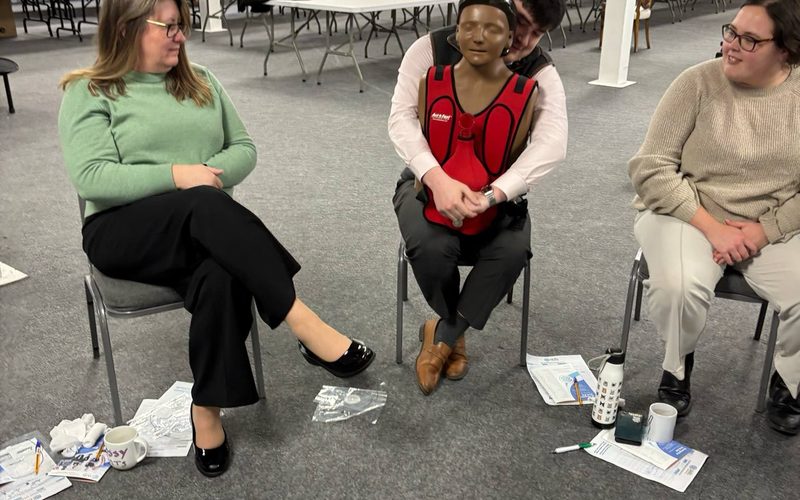
Emergency Paediatric First Aid
A focused one-day qualification covering infant and child emergencies — from choking and CPR to anaphylaxis and seizures. Suited to early years staff joining the team.
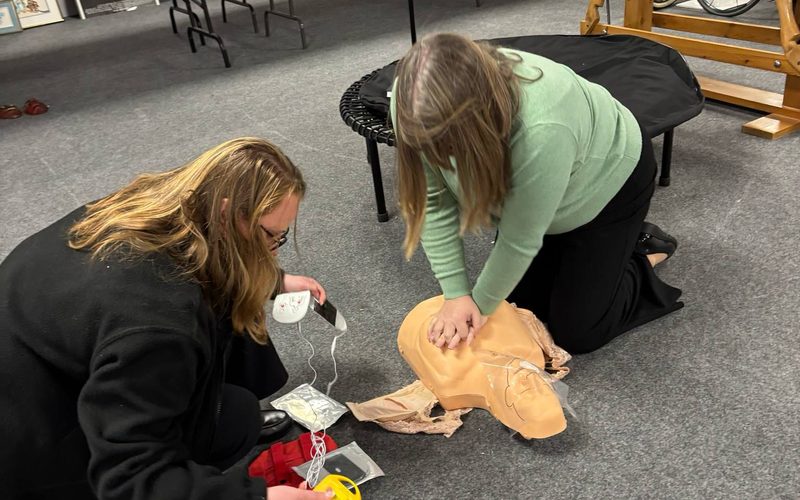
Paediatric First Aid (Level 3)
The full EYFS-mandatory two-day qualification — Qualsafe Awards (Ofqual-regulated) — covering the complete EYFS Annex A syllabus. Essential for nurseries and childminders.
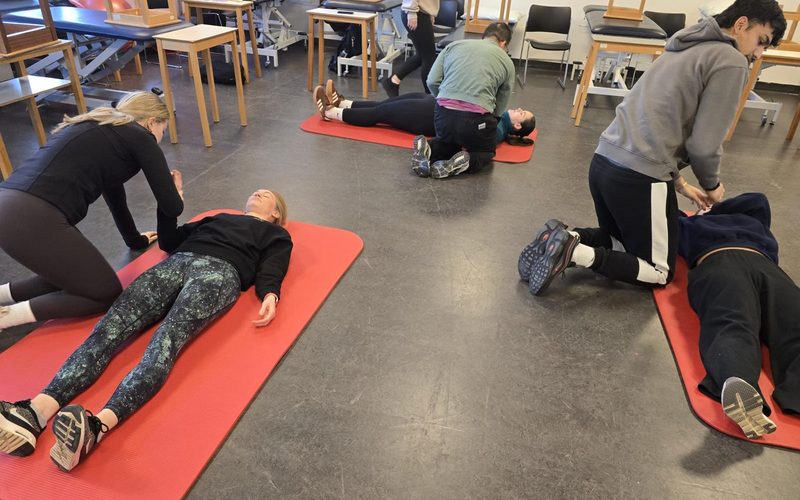
Annual First Aid Refresher
A half-day practical top-up to keep your qualified first aiders sharp between requalifications — CPR, AED, choking and recovery position. Recommended annually by HSE.
Ready to get your school team trained?
Tell us your school, preferred date and number of staff — we will come to you, bring everything, and have your team certified by the end of the day.