Paediatric First Aid (Level 3) at Your Workplace
The complete two-day paediatric first aid qualification for nurseries, childminders and early years settings — delivered on site at your premises, anywhere in the UK, for one fixed price covering your whole team.
What this course is — and why your setting needs it
The Paediatric First Aid (Level 3) is the full, statutory paediatric first aid qualification that the EYFS statutory framework (Department for Education) requires early years providers to hold. It leads to the Level 3 Award in Paediatric First Aid (RQF), awarded by Qualsafe Awards — an Ofqual-regulated awarding organisation — and maps directly to the requirements set out in EYFS Annex A.
The qualification covers a much wider range of scenarios than the one-day Emergency Paediatric First Aid course. Across two full days of hands-on training your team gains the knowledge and practical competence to manage everything from infant CPR and choking through to childhood illness, fractures, burns and anaphylaxis — the complete picture of what can go wrong in an early years environment.
From 1 September 2025, the DfE requires staff to hold a valid, current PFA certificate in order to be counted in the statutory staff-to-child ratios. Staff without a current qualification are supernumerary. Keeping certificates in date is no longer just good practice — it directly affects whether you can open on a given day.
Who should attend Paediatric First Aid (Level 3)?
This course is the right choice for anyone whose role requires them to be the nominated, on-premises paediatric first aider under EYFS rules. Typical attendees include:
- Nursery practitioners, room leaders and nursery managers
- Pre-school and playgroup staff
- Registered childminders (mandatory to register with Ofsted) and childminding assistants
- Nannies and au pairs seeking a recognised, formal qualification
- After-school and holiday club supervisors working with EYFS-age children
- School staff in nursery or reception classes (EYFS settings within schools)
If you are a newly hired Level 2 or Level 3 childcare practitioner who needs to count in ratios within your first three months, the one-day Emergency Paediatric First Aid course may provide a faster route into ratios — but it is not sufficient for the designated on-premises PFA role. Your trainer can help you decide which qualification fits your current situation.
What your team will be able to do
The syllabus covers the full scope of EYFS Annex A. By the end of both days, each learner will be able to:
Life support — infants and children
- Carry out a primary survey (DR ABC) on an infant or child and call 999 or 112 correctly
- Place an unresponsive child or infant safely into the recovery position
- Deliver paediatric CPR: 5 initial rescue breaths then 15:2 compressions-to-breaths (Resuscitation Council UK 2025 guidelines), at the correct depth for each age group
- Operate an AED safely on a child, including correct pad placement
- Manage a choking infant (back blows and chest thrusts — never abdominal thrusts on an infant) and a choking child (back blows and abdominal thrusts)
Bleeding, shock and wounds
- Control minor and severe bleeding, dress wounds and manage shock in a young casualty
- Recognise signs of internal bleeding and know when to summon emergency help
Bone, muscle and head injuries
- Identify suspected fractures, dislocations and sprains in children, and manage them safely without causing further harm
- Recognise potential head, neck and spinal injuries and support the casualty correctly until help arrives
Burns, scalds and electric shock
- Treat minor and serious burns and scalds — including cool-water first aid and recognising when hospital assessment is required
- Make the scene safe and manage a child who has received an electric shock
Allergic reactions and medical emergencies
- Recognise anaphylaxis in a child and administer an adrenaline auto-injector (such as an EpiPen) correctly
- Support a child during an asthma attack and know when to escalate to 999
- Recognise and respond to febrile convulsions and other seizures
- Identify warning signs of meningitis and sepsis in young children — and act fast
- Manage a diabetic emergency (hypo or hyperglycaemia) in a child
- Respond to croup and other acute breathing difficulties
Poisons, eye, ear and environmental hazards
- Manage a child who has swallowed a harmful substance or has a foreign body in the eye, ear or nose
- Treat bites and stings and respond to the effects of extreme heat and cold
Record-keeping and infection control
- Complete accurate incident records (including RIDDOR awareness), maintain infection control throughout and protect yourself and the child from cross-contamination
How the two days run
Training is delivered entirely at your setting by one of our experienced instructors, who brings all equipment. There are no external venues to travel to and no fixed timetable imposed on your working day — we schedule around your shift pattern and opening hours.
Each day follows a similar rhythm: a brief introduction to the topic, followed by extended hands-on practice using infant manikins, child manikins, AED trainers and scenario props. The emphasis is firmly on doing, not watching. Your trainer adapts the scenarios to the layout and everyday hazards of your own setting — so learners practise skills in the context that actually matters to them.
The two days build progressively. Day one typically covers life support, airway management, bleeding and shock. Day two moves into childhood illness, injuries, burns, allergic reactions and record-keeping. Continuous informal check-ins ensure the group stays together and no one falls behind.
Groups of up to 12 people can be trained in a single course. Larger teams can be split across multiple sessions, arranged to minimise disruption to your staffing levels.
Assessment and your certificate
There is no exam paper to revise for the night before. Assessment is continuous: your trainer observes practical performance throughout both days, noting competence at each skill. A short knowledge check at the end confirms understanding of the key theory — it is straightforward for anyone who has attended and engaged with the course.
Successful learners receive the Level 3 Award in Paediatric First Aid (RQF), issued by Qualsafe Awards. Certificates are:
- Valid for three years from the date of issue
- Accepted by Ofsted as evidence of compliance with EYFS paediatric first aid requirements
- Recognised by the DfE and HSE and accepted by UK insurers
There is no shortened requalification route for this level — when the three years are up, the full two-day course must be repeated. We recommend booking the renewal well in advance of the expiry date to avoid any gap in statutory cover.
Why train Paediatric First Aid (Level 3) on site at your workplace?
Sending staff to an external public course involves travel time, mileage costs and a room full of strangers — and still costs money per head. Our on-site model is different in every respect that matters to a busy nursery manager:
Fixed price, low cost per head
One flat fee of from £735 + VAT covers your entire group of up to 12 people. At full capacity that is around £61 per person — typically less than a public course once you factor in staff travel time and expenses.
Zero travel, minimal disruption
Your team trains in their own building. No one needs to drive, park, take a bus or book a hotel. Shift cover is simpler, and staff are back at their posts the moment the course ends.
Dates that suit your rota
You choose when to train — we work around your opening hours, staff rota and term dates. No waiting for the next available public session.
Relevant scenarios in your actual environment
Your trainer uses your rooms, your layout and your everyday hazards as the backdrop. Learners practise skills in the context they will actually use them — which is what makes training stick.
Same certification, anywhere in the UK
We deliver Paediatric First Aid (Level 3) on site at your premises across the whole of the UK. The Qualsafe Awards qualification your team earns carries exactly the same regulatory weight wherever you are located.
We bring everything
Infant manikins, child manikins, AED trainers, EpiPen trainers, dressings, bandages and all scenario materials are brought by your trainer. You provide a room with clear floor space — that is all.
EYFS and the legal requirement
The EYFS Statutory Framework (DfE) is the primary legal driver for paediatric first aid in nurseries and early years settings in England. Key points every setting manager should know:
- At least one person holding a current, full PFA certificate must be on the premises and available at all times children are present — this is the "on-premises-at-all-times" duty.
- That same qualified person must also accompany children on outings.
- From 1 September 2025, a member of staff must hold a valid PFA certificate to count towards the statutory staff-to-child ratios. Those without a current certificate are supernumerary — they count towards your numbers on paper but not in law.
- Staff gaining a Level 2 or Level 3 childcare qualification on or after 30 June 2016 must obtain a full or emergency PFA certificate within three months of starting to count in ratios.
- A First Aid at Work (FAW) certificate does not satisfy the EYFS paediatric requirement — the EYFS specifically requires paediatric content covering infants and children, mapped to Annex A.
Childminders in England must hold a current full paediatric first aid certificate to register with Ofsted. Renewal must happen before the certificate expires — there is no grace period guaranteed across all settings.
Course summary
- Price
- from £735 + VAT (up to 12 people)
- Duration
- 2 days (12 guided learning hours)
- Where
- At your premises, UK-wide
- Accreditation
- Qualsafe Awards (Ofqual-regulated)
- Certificate
- Level 3 Award in Paediatric First Aid (RQF), valid 3 years
- Suitable for
- Nurseries, childminders, pre-schools, EYFS settings
or call 0800 852 7739
Questions about Paediatric First Aid (Level 3)
Is Paediatric First Aid (Level 3) a legal requirement for nurseries and childminders?
Yes. The EYFS statutory framework (DfE) requires at least one person holding a current, full paediatric first aid certificate to be on the premises at all times children are present, and to accompany children on any outings. From 1 September 2025, a member of staff needs a valid PFA certificate to count in the statutory staff-to-child ratios. Childminders must hold a current full certificate to register with Ofsted. The Level 3 Award in Paediatric First Aid (RQF) — awarded by Qualsafe Awards — fully satisfies these requirements.
What is the difference between Emergency Paediatric First Aid and Paediatric First Aid Level 3?
Both are Ofqual-regulated qualifications, but they differ in depth and what they allow you to do:
- Emergency Paediatric First Aid (EPFA) — one day, six hours. Covers emergency life-saving responses only (CPR, choking, bleeding, anaphylaxis basics, seizures). Suits newly hired childcare staff who need to count in ratios within their first three months, but is not sufficient for the designated on-premises PFA duty.
- Paediatric First Aid Level 3 (Full PFA) — two days, twelve hours. Covers the complete EYFS Annex A: all emergencies plus childhood illnesses, fractures, burns, poisoning, foreign bodies, bites, temperature extremes, detailed anaphylaxis management and full recording/reporting. This IS sufficient for the designated on-premises role, and is mandatory for childminders registering with Ofsted.
If you are unsure which route you need, call us on 0800 852 7739 and we will advise you.
How many people can attend Paediatric First Aid (Level 3) at our workplace?
Up to 12 people per course. The fixed price of from £735 + VAT covers the whole group regardless of whether you have 4 or 12 attendees — so training your whole team together in one visit is by far the most cost-effective approach. If you need to train more than 12 people, we can schedule additional sessions, sometimes back-to-back to minimise disruption.
Do participants need any prior first aid knowledge before attending?
None at all. The course starts from the basics and builds progressively. Your trainer introduces each topic before moving into hands-on practice, so everyone starts on an equal footing. Learners who have held a previous paediatric first aid certificate will find a helpful refresher of familiar skills alongside new material updated to current guidelines.
How is the course assessed, and what happens if someone does not pass?
There is no written exam paper to prepare for in advance. Assessment runs continuously across both days: your trainer observes each learner's practical skills during exercises and scenarios, and a short knowledge check at the end confirms understanding of key theory. Qualsafe Awards sets the pass criteria. For anyone who needs more time on a particular skill, your trainer will discuss a follow-up practical reassessment — this is straightforward to arrange and is not a failure of the whole course. Most learners who attend both days fully and engage with the activities are successful.
What do we need to provide for on-site Paediatric First Aid training?
Very little. We bring everything your trainer needs:
- Infant and child manikins
- AED trainer devices
- EpiPen / auto-injector trainers
- Dressings, bandages and scenario props
- Printed materials and Qualsafe paperwork
You need to provide a room with enough clear floor space for practical exercises, ideally with furniture that can be moved aside. Toilets, reasonable ventilation and parking or unloading access for the trainer round off the basic requirements — that is genuinely all.
How long is the certificate valid, and how do we renew it?
The Level 3 Award in Paediatric First Aid (RQF) is valid for three years from the date of issue. Unlike some other first aid qualifications, there is no shorter requalification option at this level — when the certificate expires, the full two-day course must be repeated. We strongly recommend booking the renewal course a few weeks before the expiry date to ensure there is no gap in your EYFS compliance or in your ratios. Get in touch and we can keep a record of your renewal dates and remind you when the time approaches.
Is on-site Paediatric First Aid (Level 3) at our workplace cheaper than a public course?
For most settings with four or more staff to train, yes — and often significantly so. Our from £735 + VAT flat fee covers up to 12 people. At full capacity that is around £61 per person, with no travel costs, no fuel, no parking and no time lost commuting to an outside venue. Compare that to a per-head price at a public course, plus each person's return travel, and the on-site option is usually the better-value choice once you have a group of even modest size.
Do you deliver Paediatric First Aid (Level 3) at our workplace anywhere in the UK?
Yes — we deliver this course on site at your premises anywhere in the UK. Whether your setting is in a city centre or a rural location, we travel to you. Contact us with your postcode and preferred dates and we will confirm availability and any travel arrangements for your area.
Related courses for education and childcare
Need a different level of cover, or training for broader school-age or adult settings? These courses are popular with teams working across education and childcare.
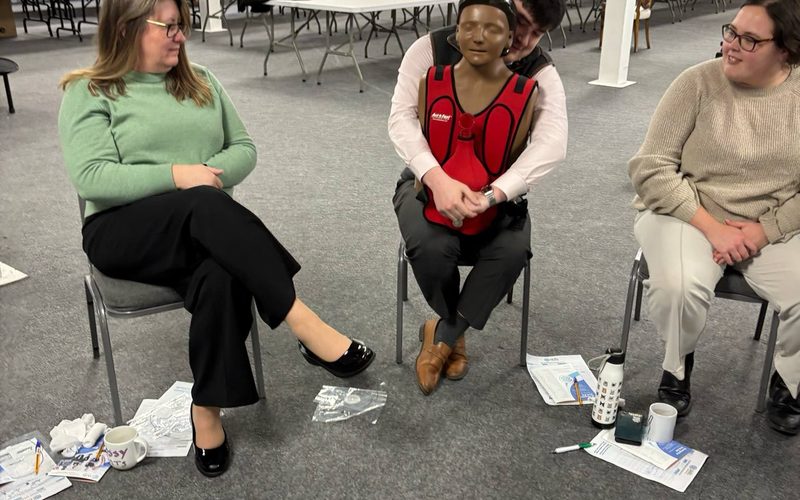
Emergency Paediatric First Aid
One-day paediatric qualification for childcare staff needing to count in ratios quickly — covers life-saving emergencies for infants and children.
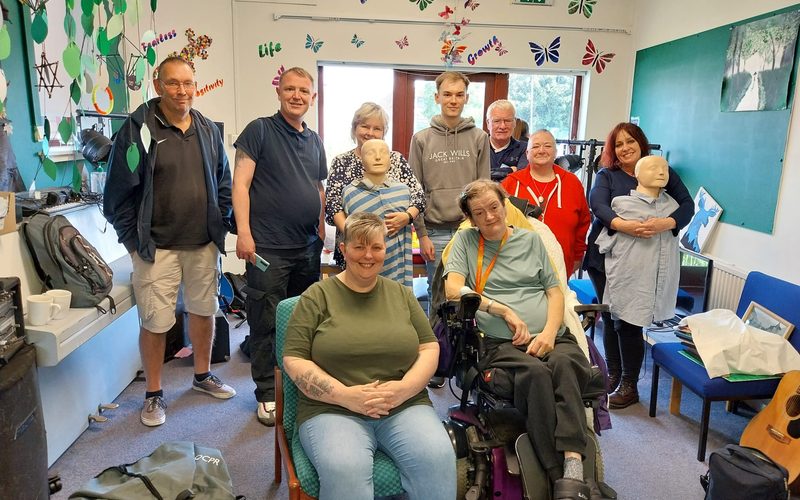
First Aid Training for Schools
Practical first aid built around the school environment, delivered at your premises to meet your needs assessment requirements.
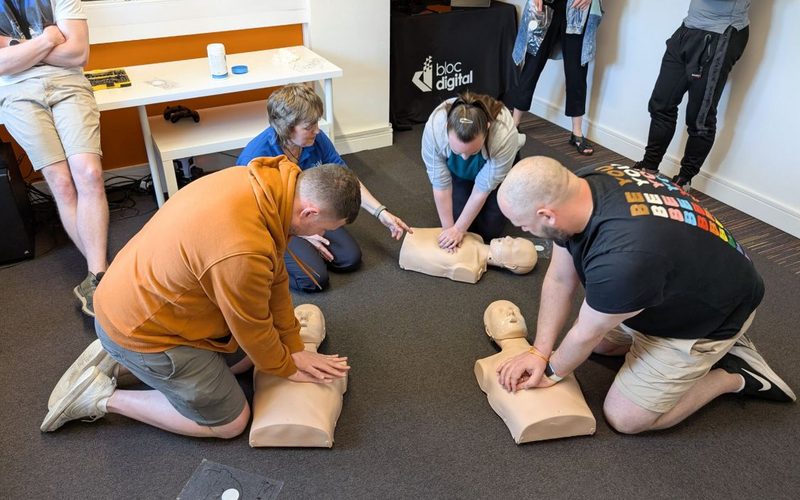
Emergency First Aid at Work
One-day HSE-compliant workplace first aid for lower-risk settings — the most widely held first aid certificate in the UK.
Ready to book Paediatric First Aid (Level 3) at your workplace?
Tell us your location, your preferred dates and the number of staff to train — we'll handle the rest and come to you.